


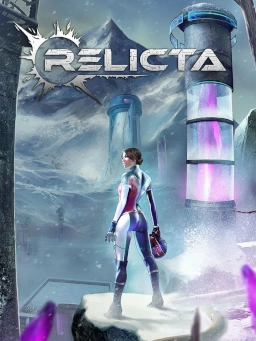
| DATA | |
|---|---|
| Developer(s) | Mighty Polygon |
| Genre | Puzzle |
| Platform(s) |  |
| Release date | 2020-08-03 |
You enjoyed Portal a lot. You toured its rooms solving the inventive puzzles, harboring a love-hate relationship towards GLaDOS. But then it was over in a flash, and you were left yearning for more. You also like boxes. What can you do now?
You could give Relicta an opportunity. It certainly deserves one, as long as you accept its limitations, and the fact that it won't replace Valve's masterpiece in your heart.
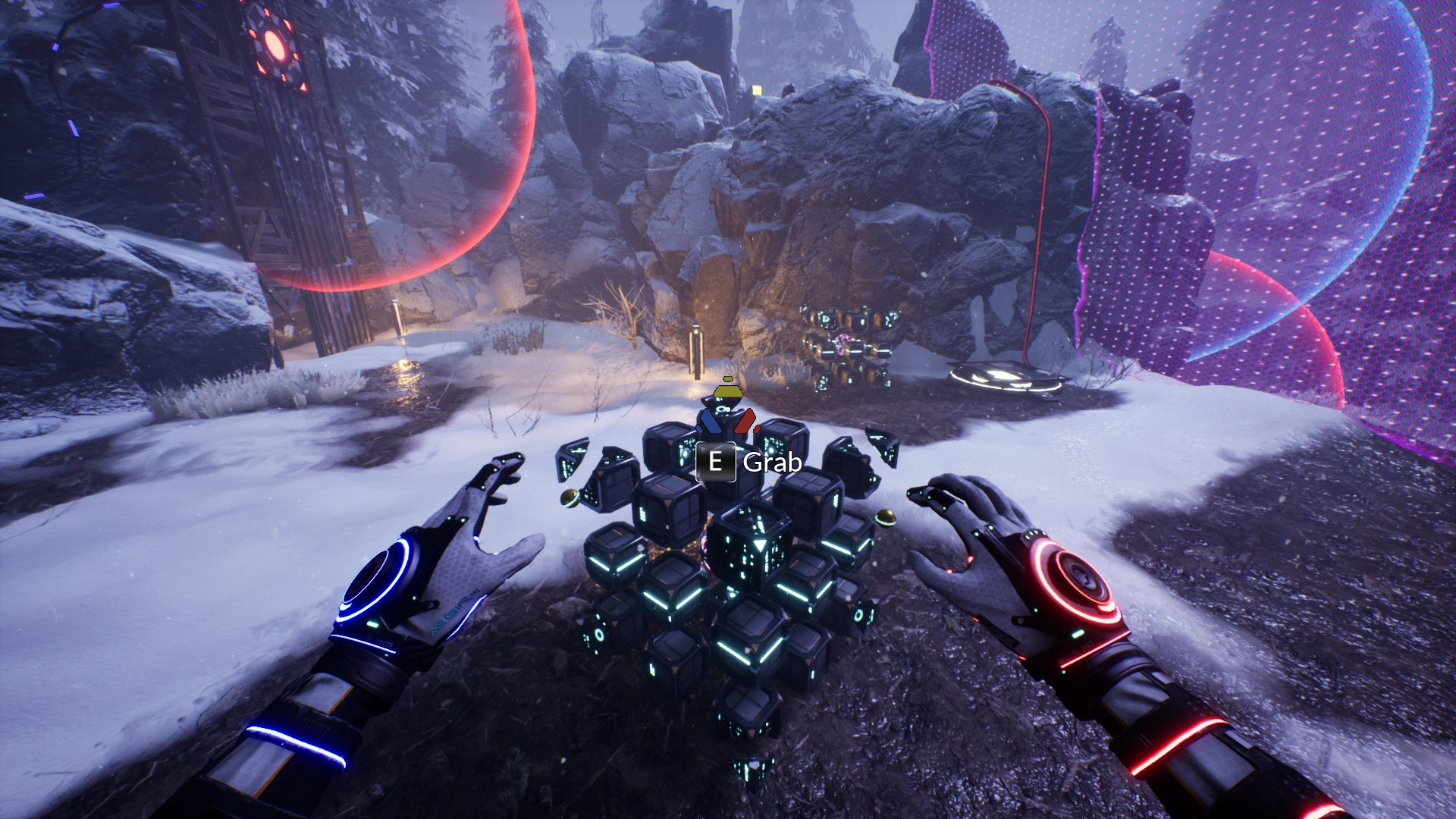
The game takes place in the year 2120, in a lunar base hosting a research facility commissioned by the United Habitats Authority (UHA, the multinational governing body in the future), and populated by a few foul-mouthed scientists. Unbeknownst to the general public, secret research into a mysterious artifact with gravity manipulation capabilities is being carried out. At the same time, the terraforming of the Moon is taking place, albeit in a limited scope, within giant domes that contain a different biome each.
The story is explained -with a somewhat uneven pace, as long lapses without narration are abundant- through conversations between characters and several documents (emails, logs, etc) that you can find spread around the station, detailing complex political maneuvers and the usual backstabbing. There's a plot twist that could be seen from a mile away (except by the main character, apparently). Not that it matters much to the eventual course of action, mind you. Also, the characters are very disagreeable and behave like children, bickering constantly and exchanging blasphemies (the use of "fuck" eventually gets tiring and is even turned into an ingame joke later on). Hard to believe they all hold PhDs.
The gravity puzzles actually are more analogous to magnetism. There are cubes that can have either neutral, positive or negative polarity gravity, indicated by their color. Same colors repel, opposite colors attract. In addition to this, gravity can be disabled so that cubes either float motionless or keep moving with the last momentum they had. Toying with this conforms the core gameplay. To add depth, there are many devices in the experiment areas, like static or moving platforms, force fields of different effects (blocking only you, only the cubes, or both), switches that can be toggled by you or perhaps by a cube (be it a generic one or a cube labelled with a certain symbol), an many more. The challenges get progressively more complicated, of course, evolving into long, complex chains of actions and consequences. By the end of the game, try not to suffer a stroke. My best advice for you is to analyze the end result you need to get, and to work backwards from that.
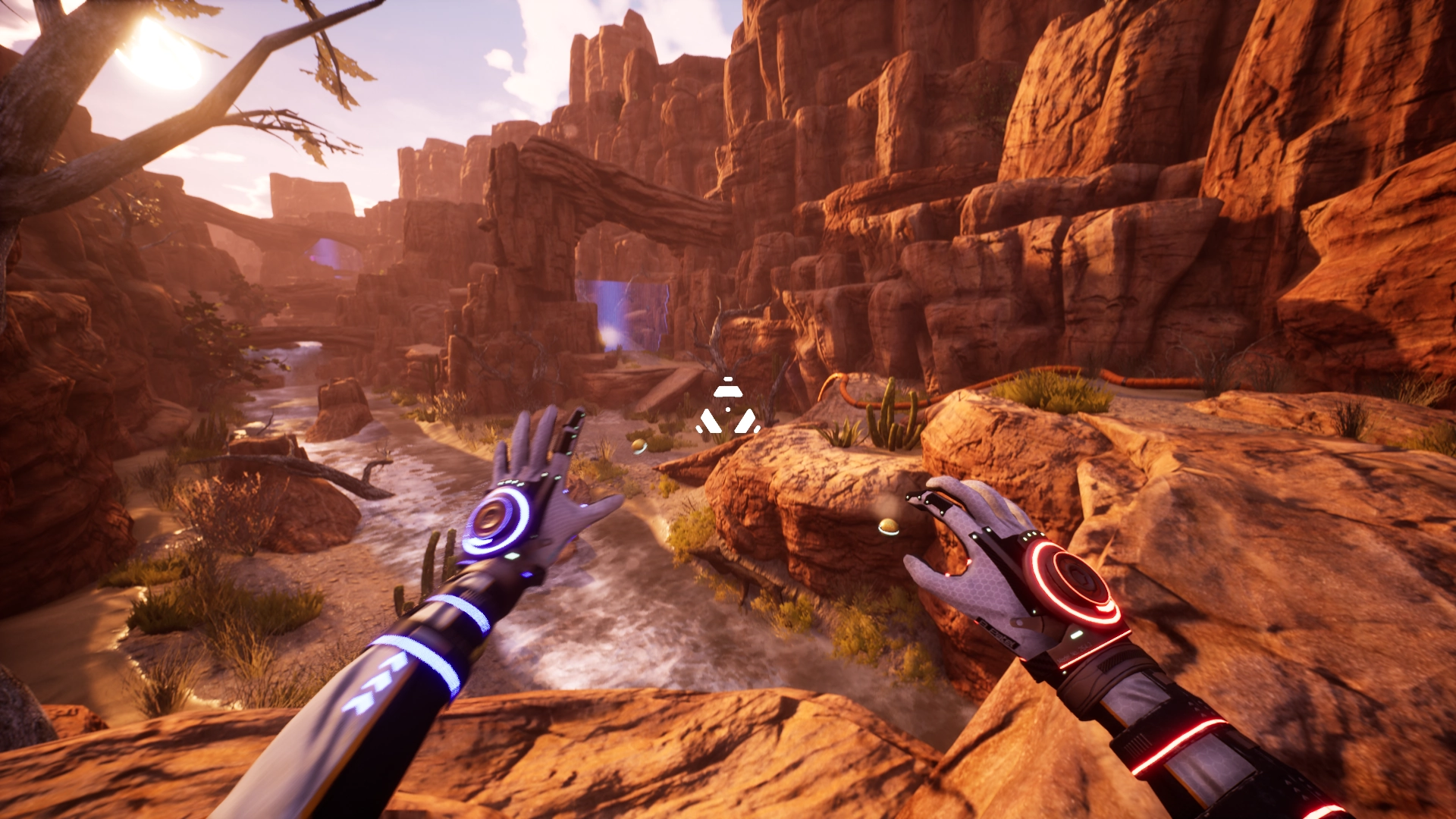
Before moving on, I need to give a little criticism here. First, the pretext for having to beat these puzzles doesn't make much sense. In Portal, you're held prisoner by an antagonist that wants to experiment with you. Here, you're told that the main character needs to move from point A to point B, but for weak plot reasons the tests can't be turned off (despite the situation being an emergency), so you need to pass them in order to advance. Also, the puzzles are too video game-y and evidently designed to assess the abilities of the subject (that is, you), and not focused on studying the gravity technology itself.
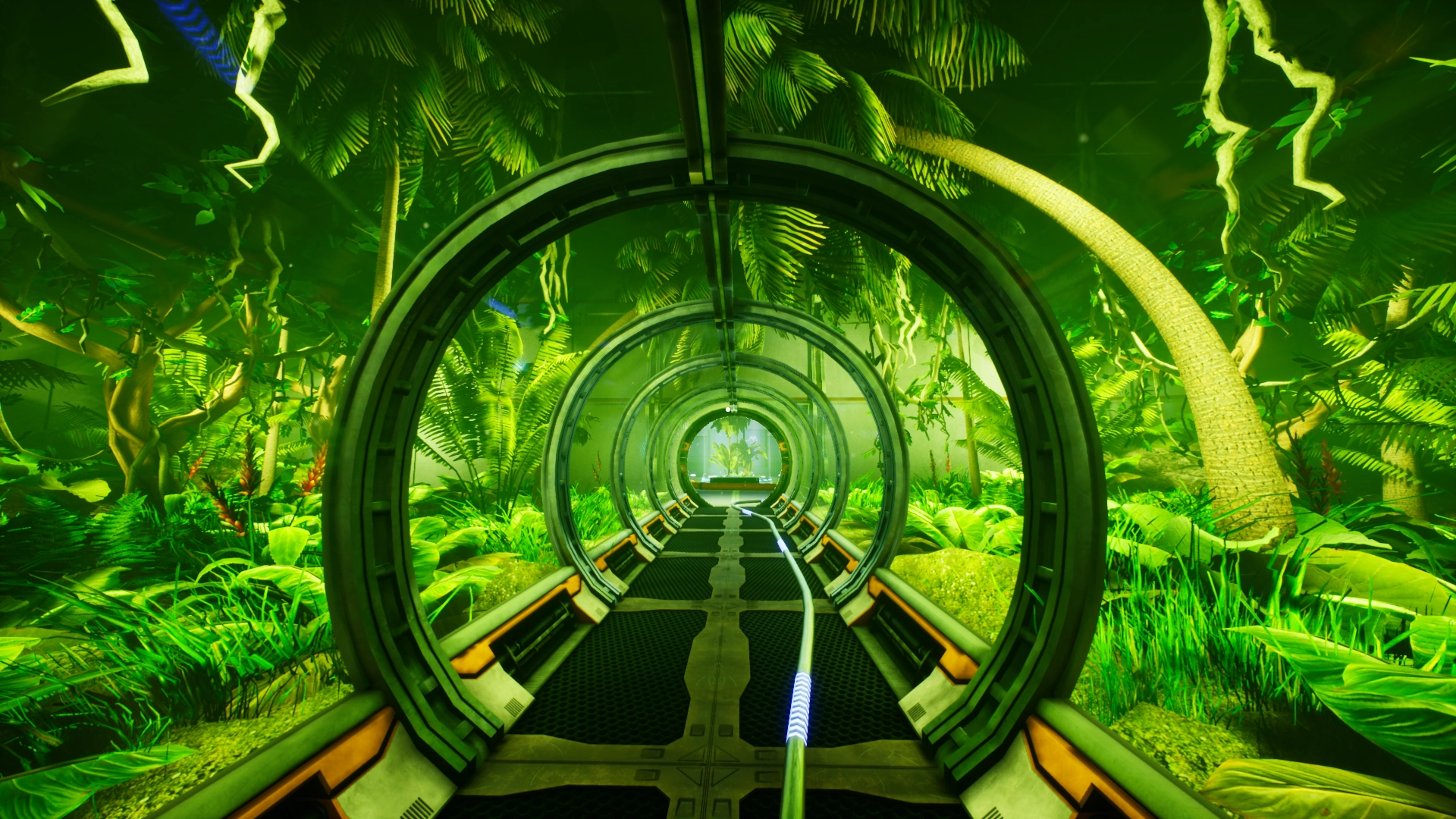
That's not the only bad aspect of it. Some of the "tests" are ludicrous due to the arbitrarily imposed limitations of your character. She gloats about being fit, yet she's unable to crouch (forcing you to use a cube to launch another into a crawlspace in order to press a switch). Cubes can't be lifted over your head (despite lacking weight), nor can they be thrown by hand or kicked. In one of the earlier areas, the goal was to get a cube to the end of a course... in order to step on it and reach a ledge that lead to the exit, which my grandmother could have mantled over with no effort! Yes, I get that we must accept to play with the game's rules, but some of the situations can feel stupid.
Finally, some of the puzzles seem to be badly designed, with the solution not at all obvious. Sometimes I spent a lot of time wandering around and going over the available elements until I found the small detail that I had missed. Some tests I solved by cheesing through in various unintended ways (I'm confident of this because a couple of devices, such as platforms, went unused, and I seriously doubt they were just for decoration), completely ignorant of what the "correct" way was. You could say I thought "out of the box" (no pun intended). Some sections can get frustrating, specially the ones with platforming or that require to launch a cube at a precise angle. There are a few bugs here and there, mostly involving physics. As you can't save the game anytime you want, you'll have to reset more than once.
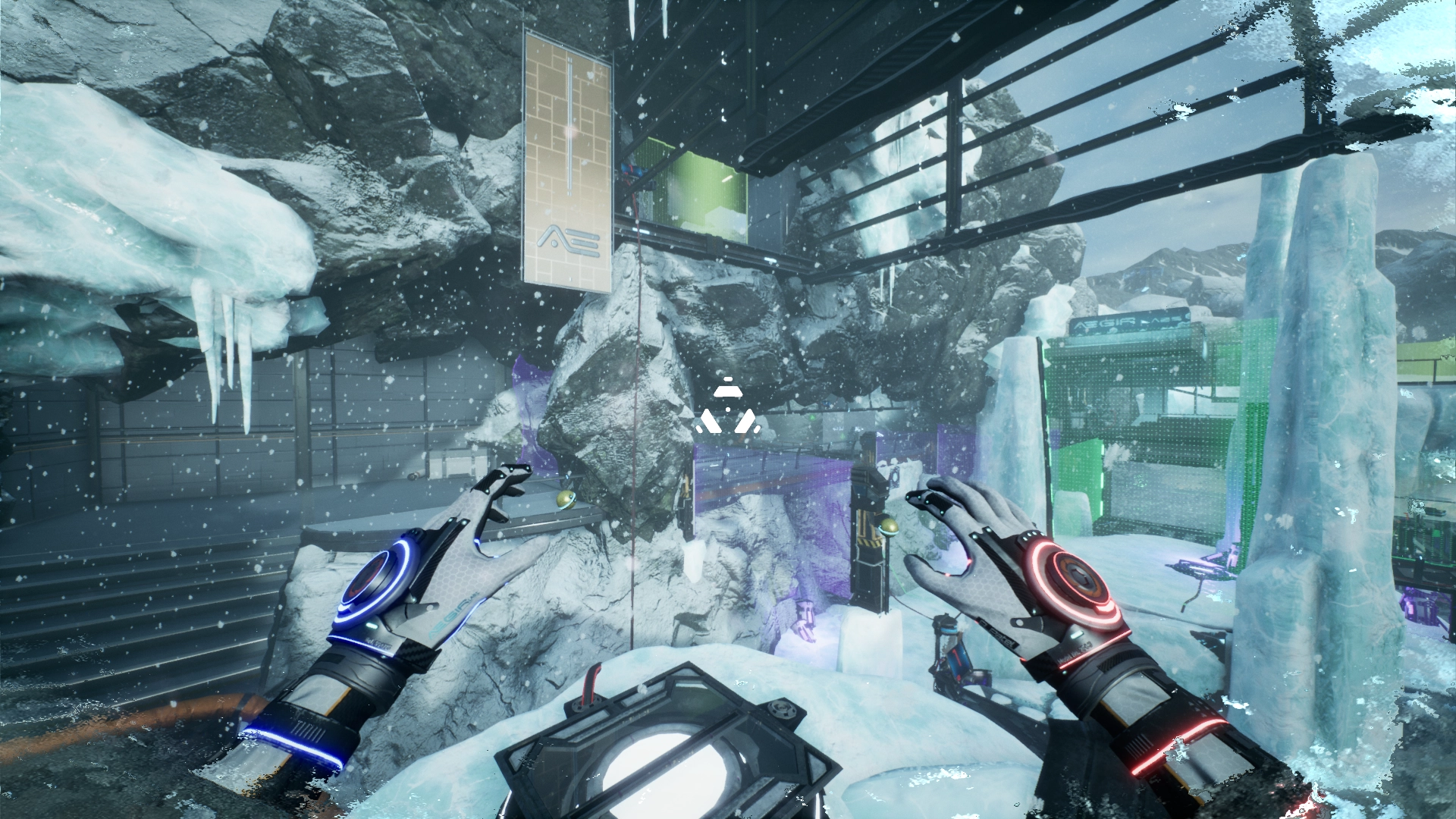
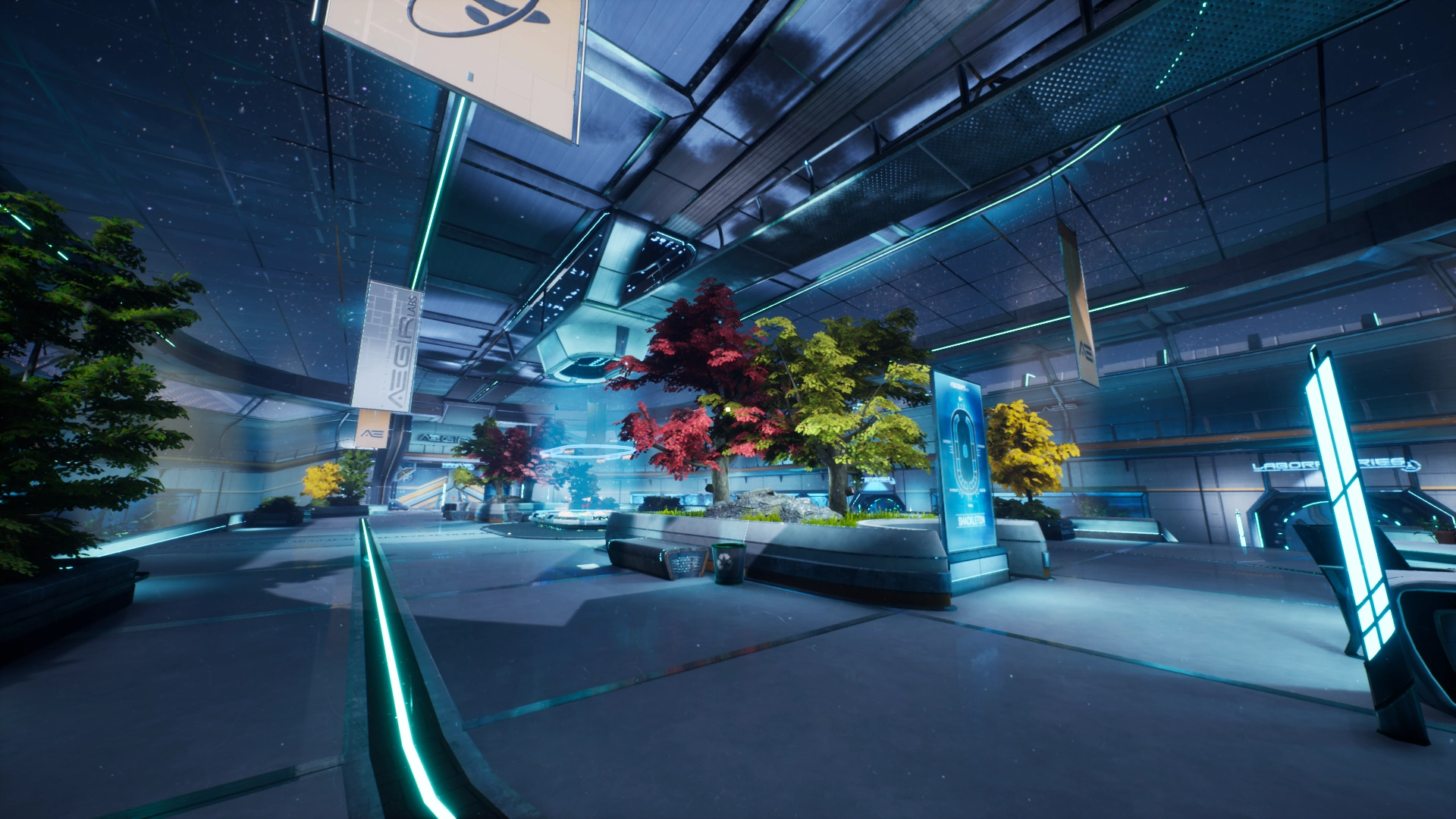
The environments are quite beautiful, and even more so if we take into account that Relicta was developed by a 6-person Spanish studio. Quite impressive. The problem is that, out of the puzzle areas, they're non-interactive. People that complained about Doom 3 should go hug it and apologize now. It's a series of corridors that lead from one "room" (most take place outdoors) to the next, and if you stray five feet from the path you're stopped by a conveniently placed force field. Nothing can be touched, though you can pick barely hidden collectibles and open doors. The elevators I found particularly funny: when using them an interface appears listing a series of destinations, which makes no sense because there are only two possible "floors": up or down. I mean, what would happen if you chose the jungle environment in the elevator that ONLY leads to the arctic biome?
A stain in the otherwise immaculate graphics is the agressive LOD that has been implemented. As you approach the environments, details appear suddenly or kind of "morph" into place, and this doesn't look good.
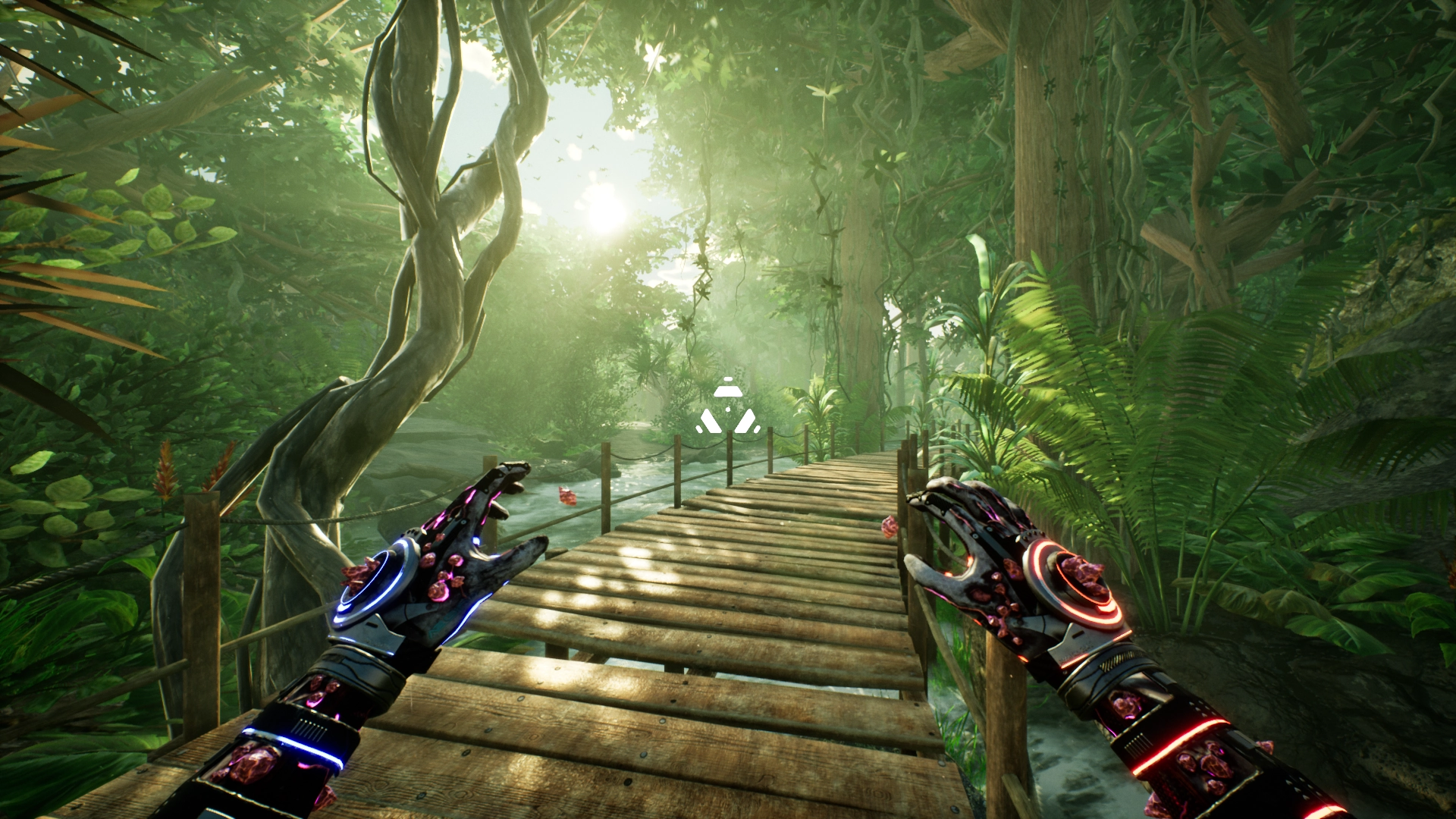
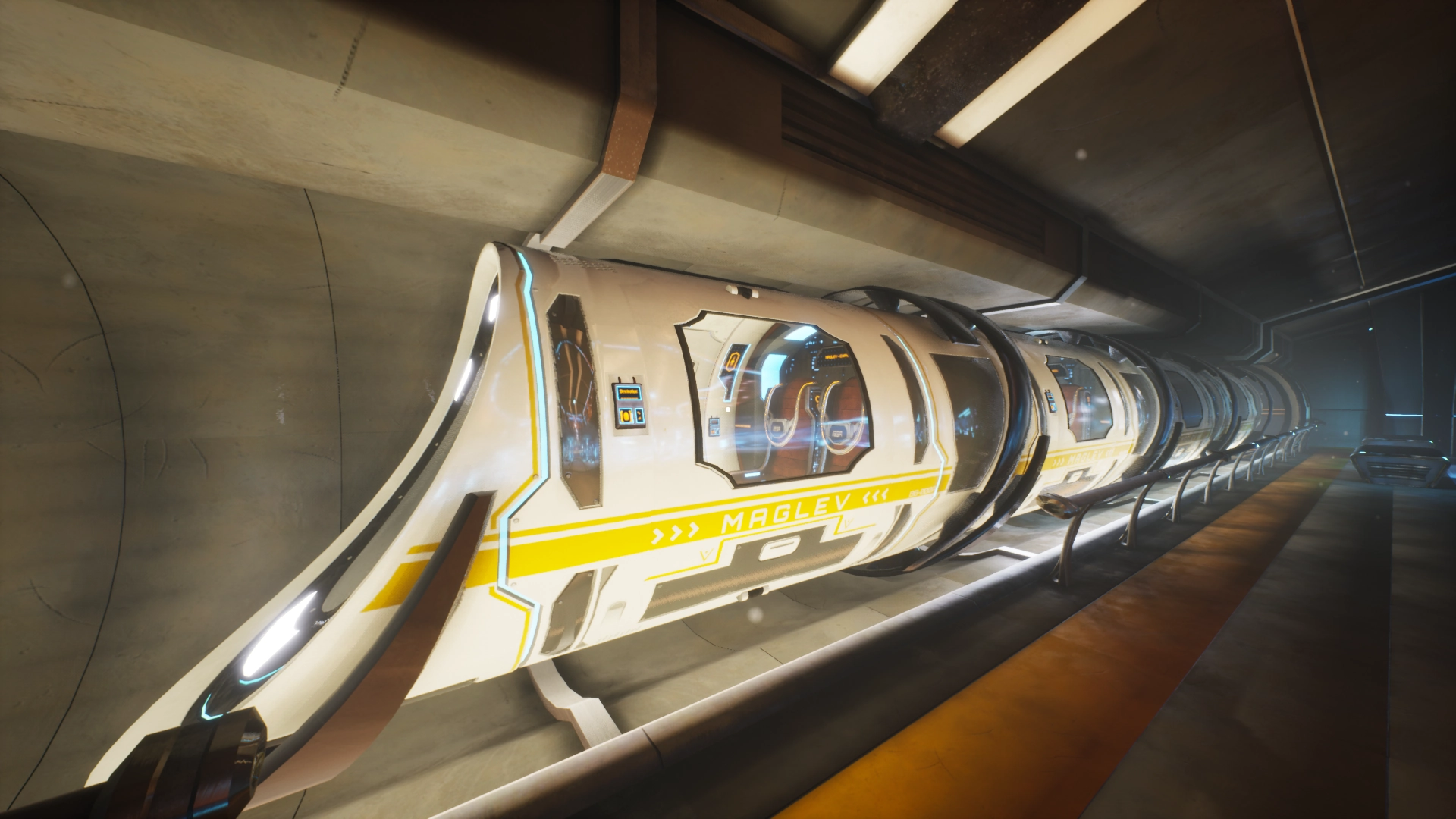
There's also a deserted main hub, too spacious to be believable in the typical sci-fi fashion (when resources are scarce, as they should be in a satellite, nobody would design a facility bigger than a cathedral). Now that I think of it (and this is just nitpicking), how come there are separate maglev platforms for every biome you can travel to, as a central train station would have been the most logical choice? Perhaps to give plot exposition while you walk between them?
After this battering you may be thinking that the game's not worth it. Nothing further from the truth: I invested more than 20 hours to get to the (slightly disappointing) 2 different endings, then I played through the 2 extra mini-campaigns available (Aegir Gig and Ice Queen). I kept coming back to its twists and traps, maybe because I needed to feel the satisfaction of clearing another section again. Or because I'm a masochist, who knows. If you liked Portal, add a point to the score and be assured it'll last longer.
Playing
Steam or the Epic Store. It's also available for several consoles.