


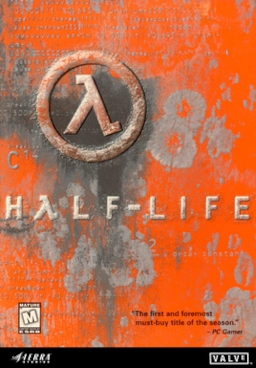
| DATA | |
|---|---|
| Developer(s) | Valve |
| Genre | FPS |
| Platform(s) |   |
| Release date | 1998-11-19 |
It was about time I reviewed this game. Maybe I should have put it first. Not just because of its relevance to the ludic community overall, but also because of the impression it left on me and how it shaped who I am now (not to mention, that now I'll have to edit a lot of articles to add links to it!).
Can you believe, this was the first PC game I bought after getting a shiny new rig when I was a teen? Talk about getting lucky. Okay, I had already played Counter-Strike and a couple other mods by then, but I didn't fully comprehend their relationship to the base game. So that can't be considered cheating. I went into the store, browsed for a bit, read the back of the boxes, and eventually made a choice that turned out to be correct. It wasn't until later that I discovered Half-Life was considered a masterpiece and one of the best PC games ever released (easily in the top 3, still to this day).
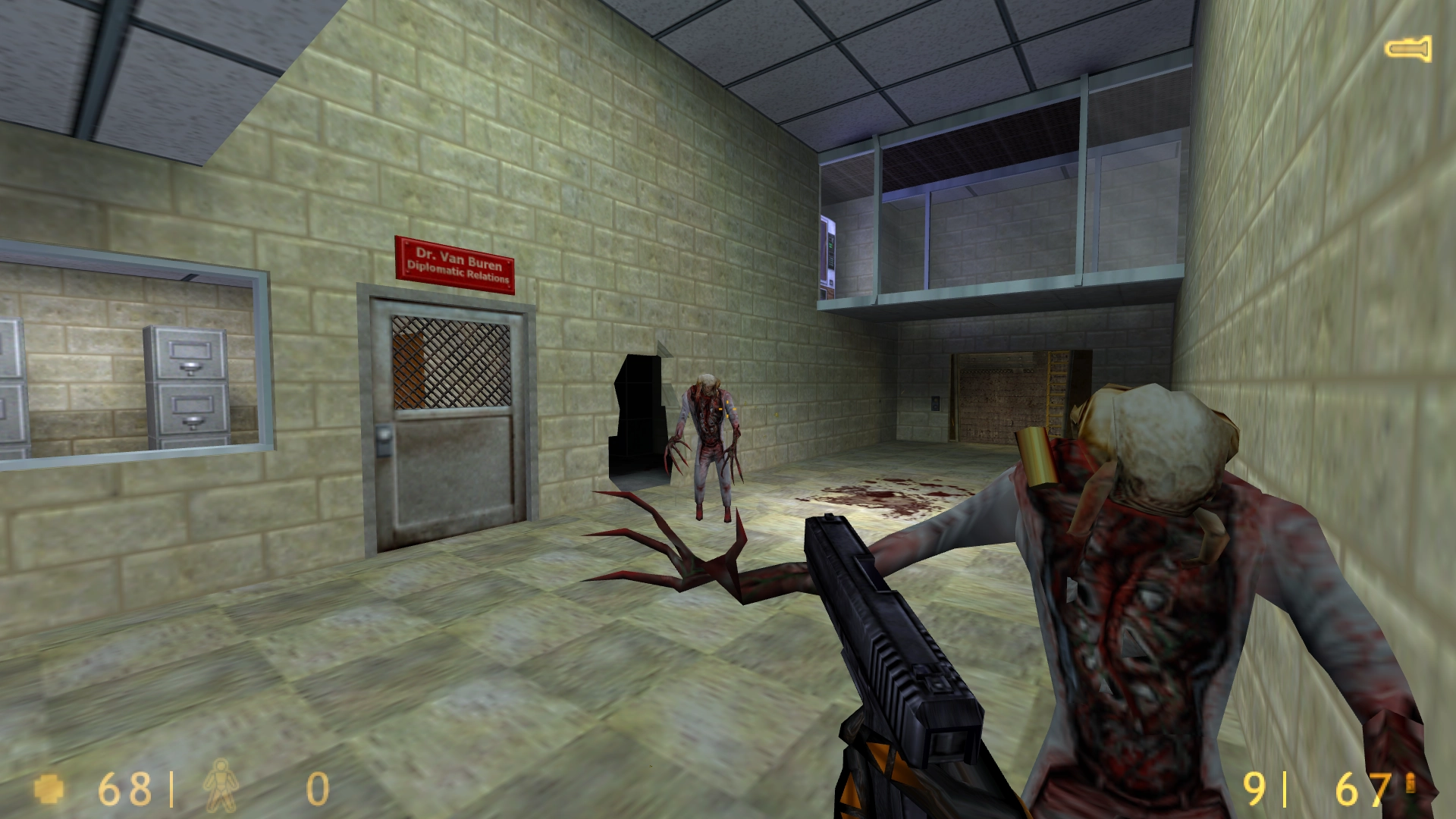
Picture 1998. Most first-person shooters were like this: you controlled a tough, muscle bound space marine named John Remington or something in that line. You entered a new level, collected weapons and ammo that were just lying there in the middle of every hallway, gunned down a few dozens of foes (terrorists, mutants, nazis...), reached the end, got perhaps a new video sequence, and the next area was loaded with a progress bar against a black background. Rinse and repeat.
HL brought a few changes. First of all, your character wasn't Rambo, it was a theoretical physicist with glasses and a PhD. You didn't begin the game being deployed as part of a military operation, you were just on your way to work (and running late) in a massive laboratory. But then, a routine experiment went haywire, ruining your day, and from then on your main priority was to survive and get help. No small feat.
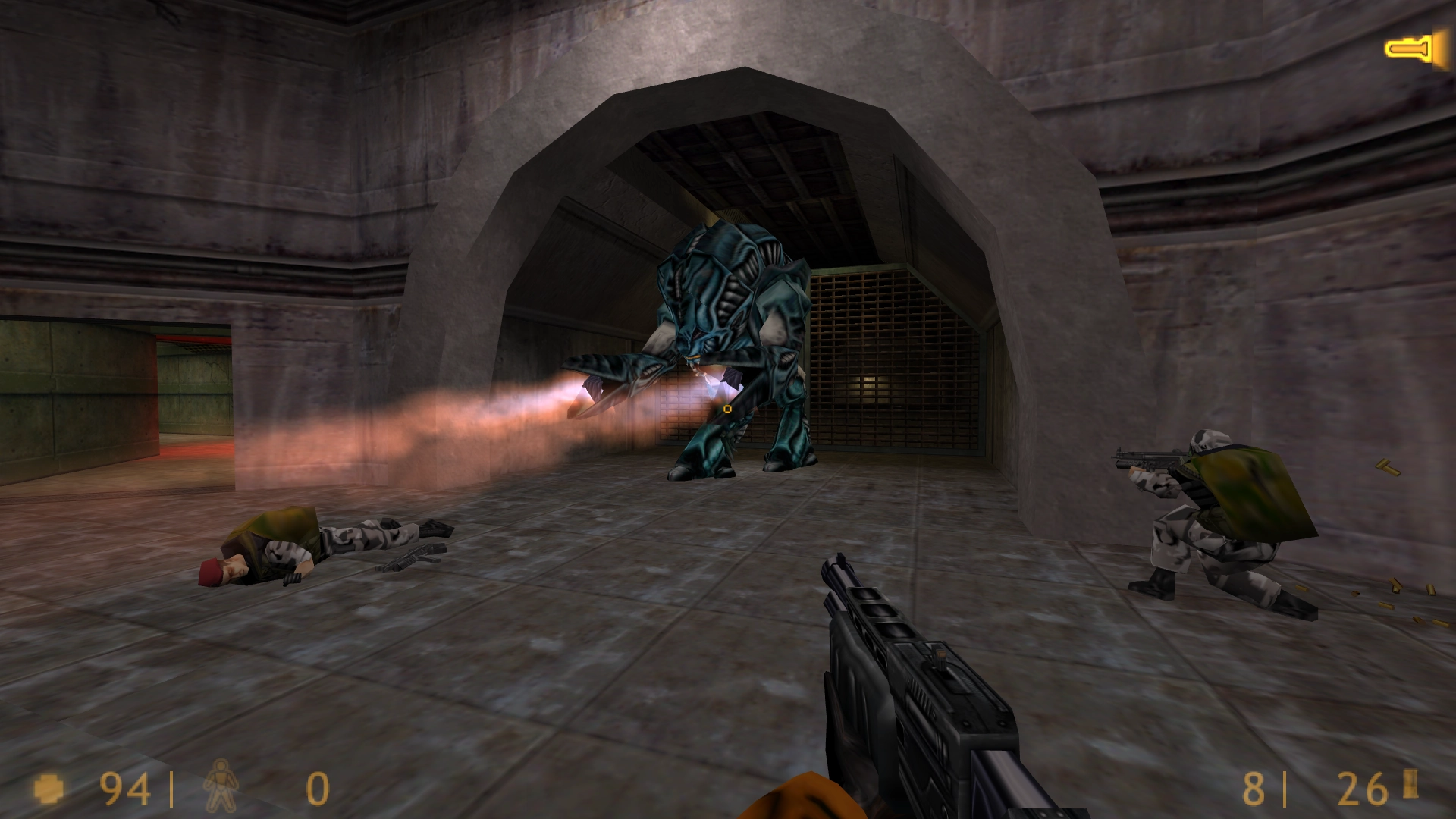
After this unusual premise, the next thing that gets your attention is the environment. How grounded and life-like it is. The Black Mesa Research Facility is colossal, ugly, with some areas clearly in disrepair and a few others on a disproportionately high budget. Exactly how it would be if the government ran it. It's also populated by employees going around minding their own stuff, and it's very interactive too, as you can fool around manipulating every switch to test their patience. Coupled with the scripted sequences, it helps to convey an appearance of a real, dynamic workplace.
The physics of this environment were also striking. The way in which your avatar moves around, the weight and inertia, the material properties of certain surfaces, and the many objects that you can realistically push around (sometimes a requirement to progress). The world felt solid and no other FPS has ever come close for me.
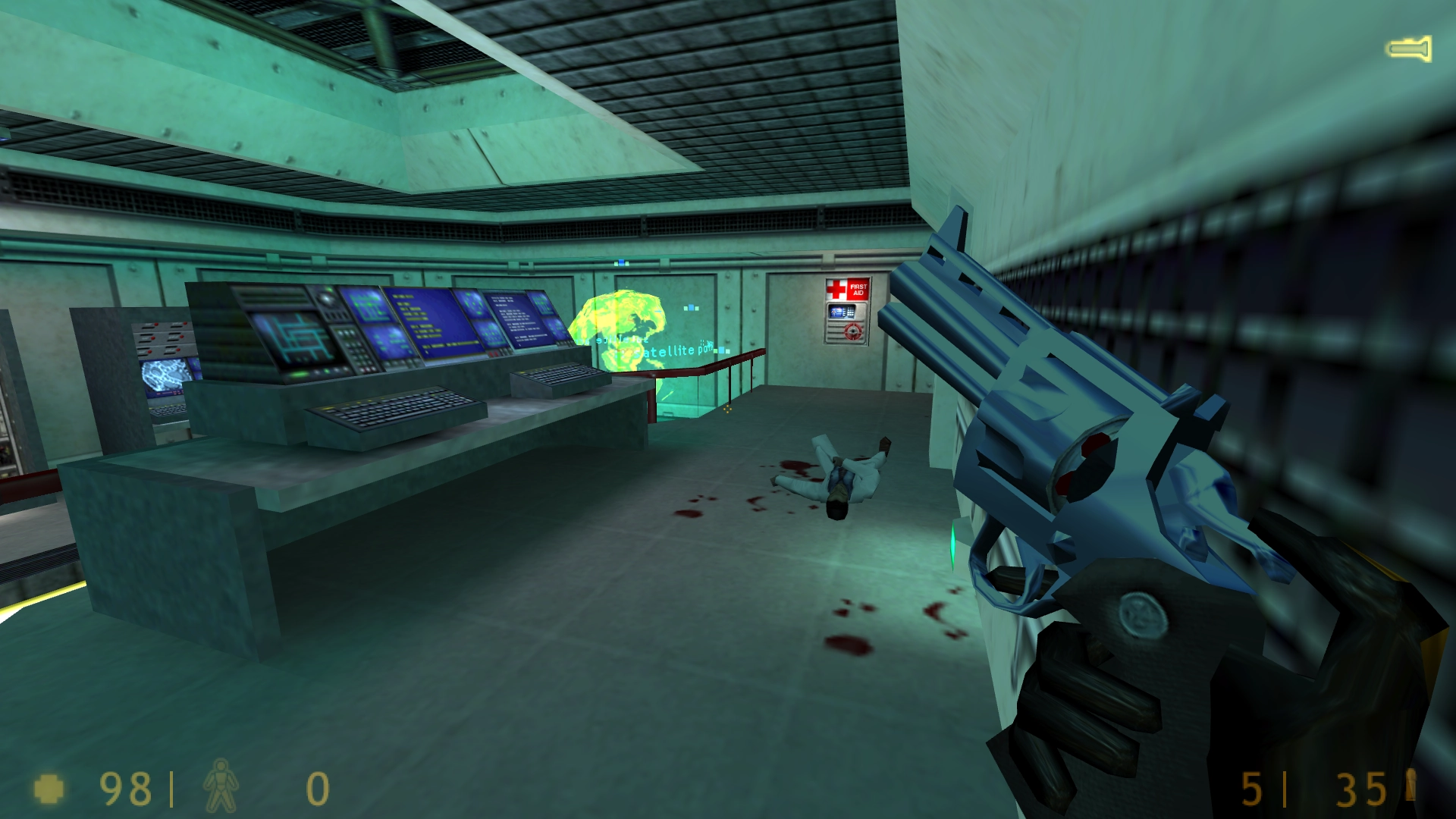
The second innovation was the game flow. Everything is continuous: from beginning to end you live the events from the perspective of the protagonist, with no cutscenes to interrupt it (well, only once, you know which one I'm talking about). There are no independent levels; each map is seamlessly connected to the previous and next, with a short loading time, and entities near this transition area are carried over. Every once in a while you must wait for an elevator to arrive or somebody to unlock a door, but most of the time you can progress at your own pace. You can take your time or speedrun through it in less than 2 hours. This is brilliant and will forever spoil your experience with other games.
It wasn't the first narrative shooter, but it was by far the best; it broke the mold and set the standard to be imitated. The near-perfect gameplay is a sublime balance between shooting, puzzles, platforming, and plot exposition (mostly indirectly).
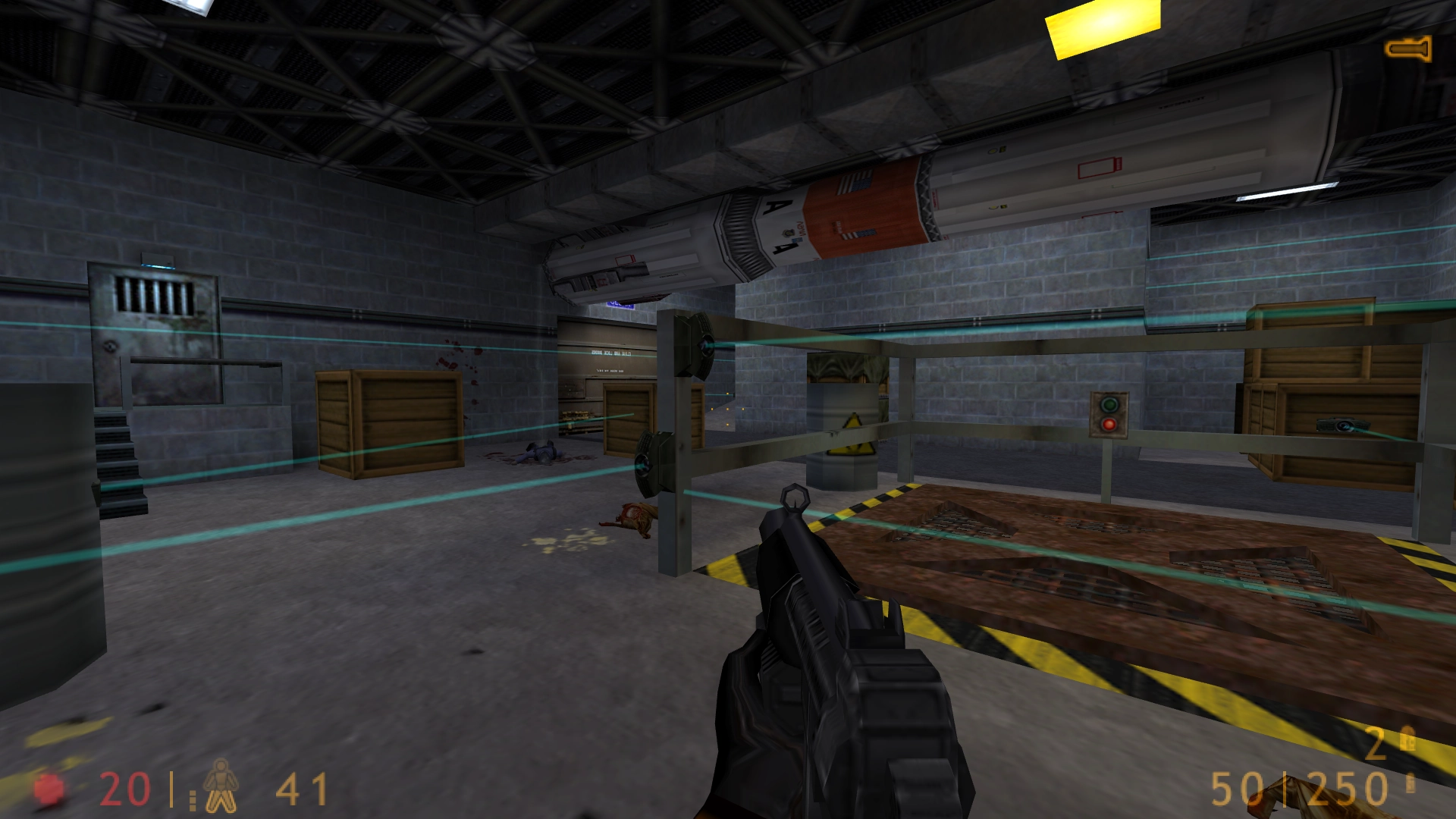
The graphics weren't revolutionary, though. Some of its contemporaries had nicer models and/or textures (in 2001, a high definition pack bundled with an expansion increased the polygon count). But the realistic baked lighting combined with the aforementioned physics gave it a peculiar "natural" feeling that I can't describe with words. I never get tired of traversing scenes in the GoldSrc engine (HL's ones I know by heart, I can play it mentally). The particle effects and dynamic lights are pleasing. Plus, the skeletal animation system that replaced the old vertex technique was turned almost in a standard.
What else? Valve offered a complete set of development tools, that allowed you to create new maps (I'll never forget my first foray into the Worldcraft editor, now Valve Hammer), models, or fully featured mods if you managed to tame the atrocious source code. A great community grew around it that has never been surpassed in either loyalty or productivity. Examples of this are Counter-Strike, Day of Defeat, Sven Co-op, Absolute Redemption, They Hunger, Cry of Fear... You'll undoubtedly recognize some of this names as industry-changing. Probably half of ModDB's SQL tables are devoted to Half-Life and its offspring, and if you were left stranded on an island with the game, its SDK and a DVD worth of mods, my calculations are that you could survive about five years before having the need of further entertainment.
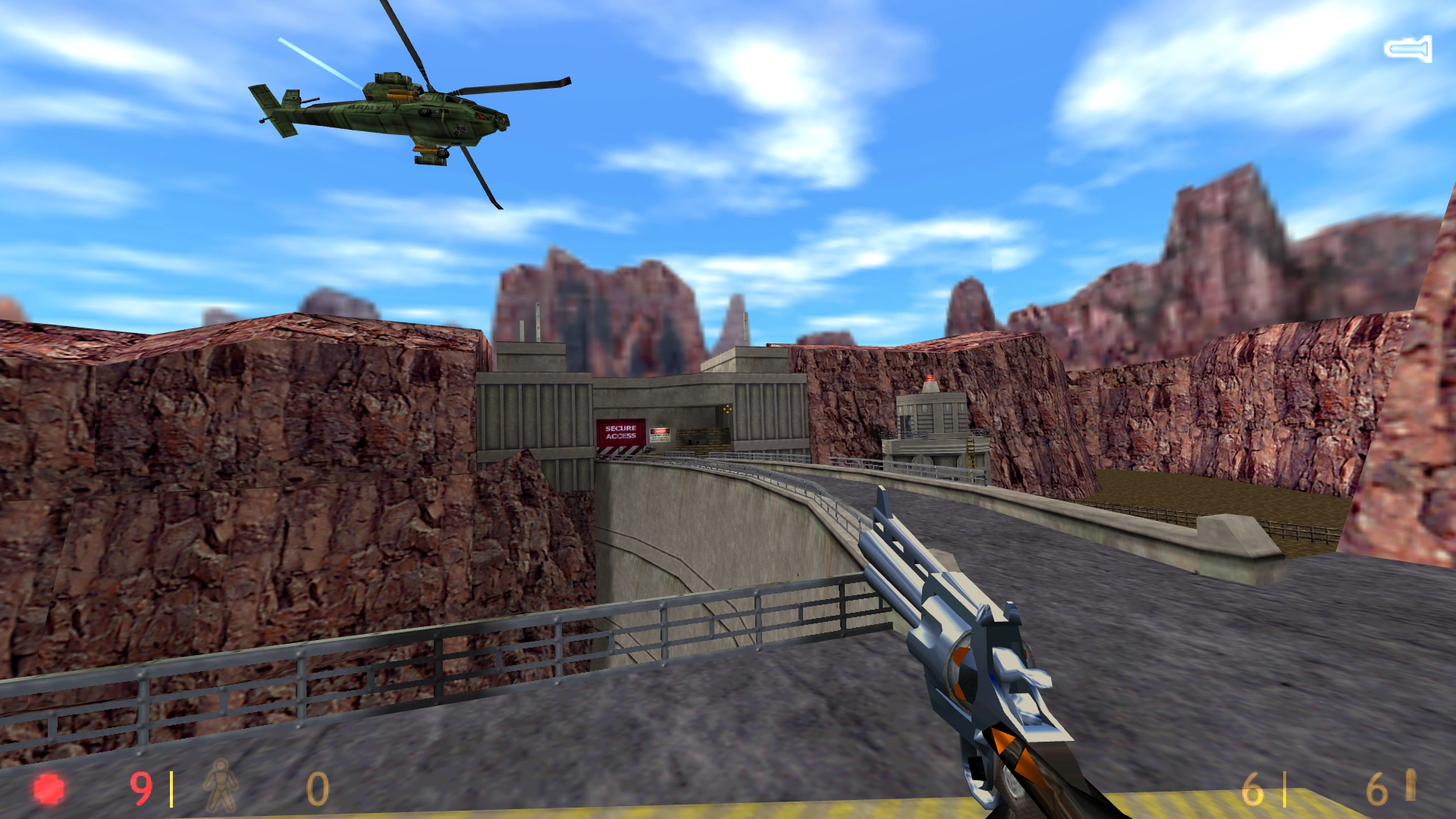
Valve has kept updating the game during all these years through their Steam service, and they even gifted us with a bunch of phenomenal new content for its 25th anniversary, including an hour-long behind-the-scenes. I can't truly think of many companies that would do this. Keep it up, people!
Are there any downsides to this game? Many people complained about it being overly long, with its last Xen chapter labelled as unnecessary. I think these people are cretins. First, HL can be leisurely finished in about 12 hours. If that's what you call "long", you must have a deficient attention span. Second, every game needs a surge in difficulty near the end. This is expected. It signifies the final test of the abilities you've acquired during the playthrough. And what better way to do it than to take the player out of his element, his comfort zone, dropping him in an alien setting?
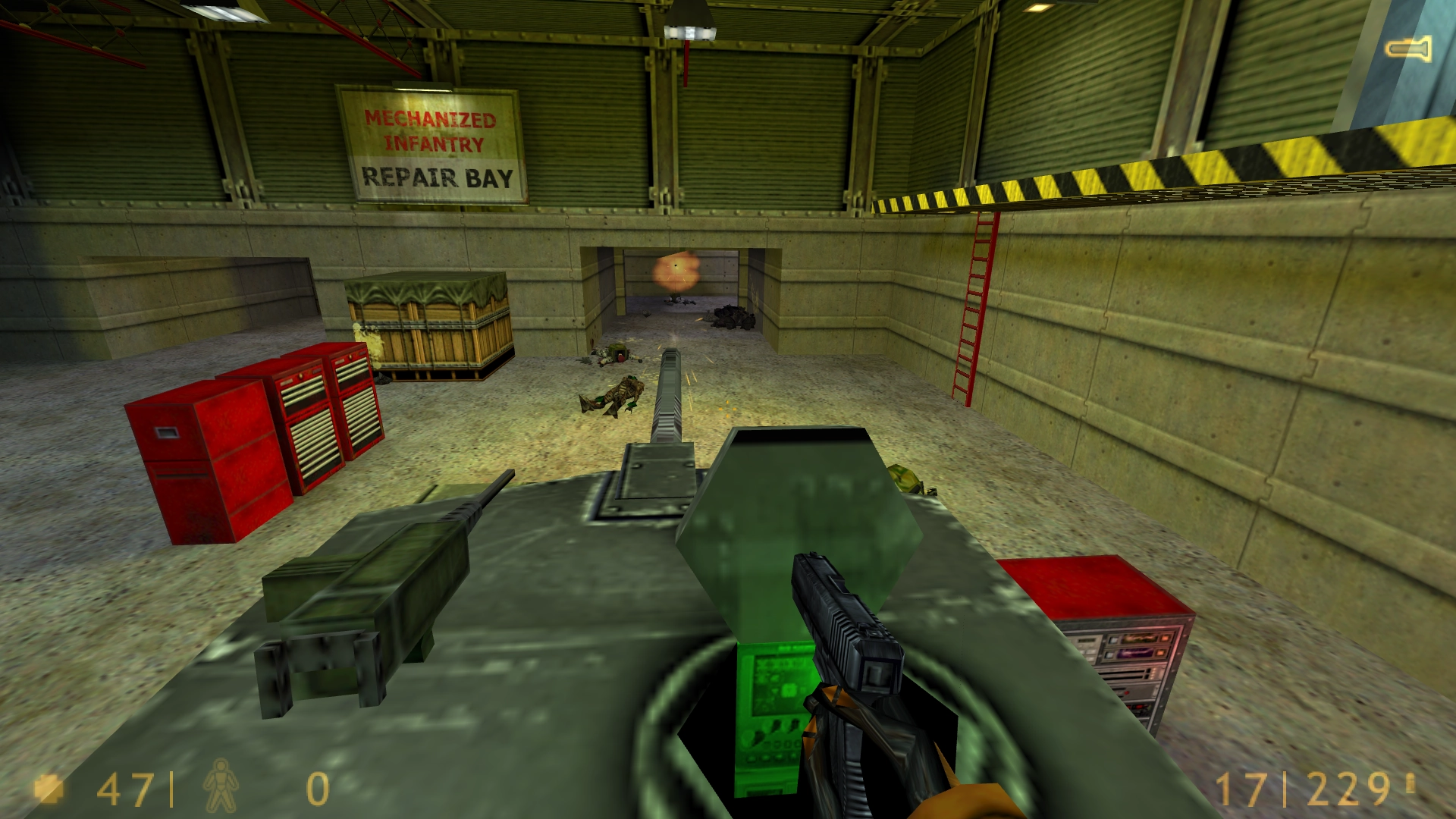
The music I can only describe as unremarkable, and I didn't even know it existed until I played the Steam version (the retail one required to have the CD inserted to hear it, which I never did). Some tracks are more suited for a nightclub than a sci-fi FPS.
But for me, the main point of criticism is Gordon Freeman. You never see or hear him during the game. According to the developers, this was done for immersion, to project the player into the world. Gordon is supposed to be you. But in that case, why bother designing a detailed background for him? Any other unnamed, mute moron would have done, and this makes things worse, as it creates a discrepancy between the plot and the action. How can a lab rat, a nerd be so proficient with weapons, easily disposing of trained Marines? Ironically, many polls have considered him to be one of the greatest video game characters of all time. This makes me laugh. So far, he's never acted on his own free will. We don't know what his thoughts are. He has no personality to speak of. He could be anybody. He might as well not exist.
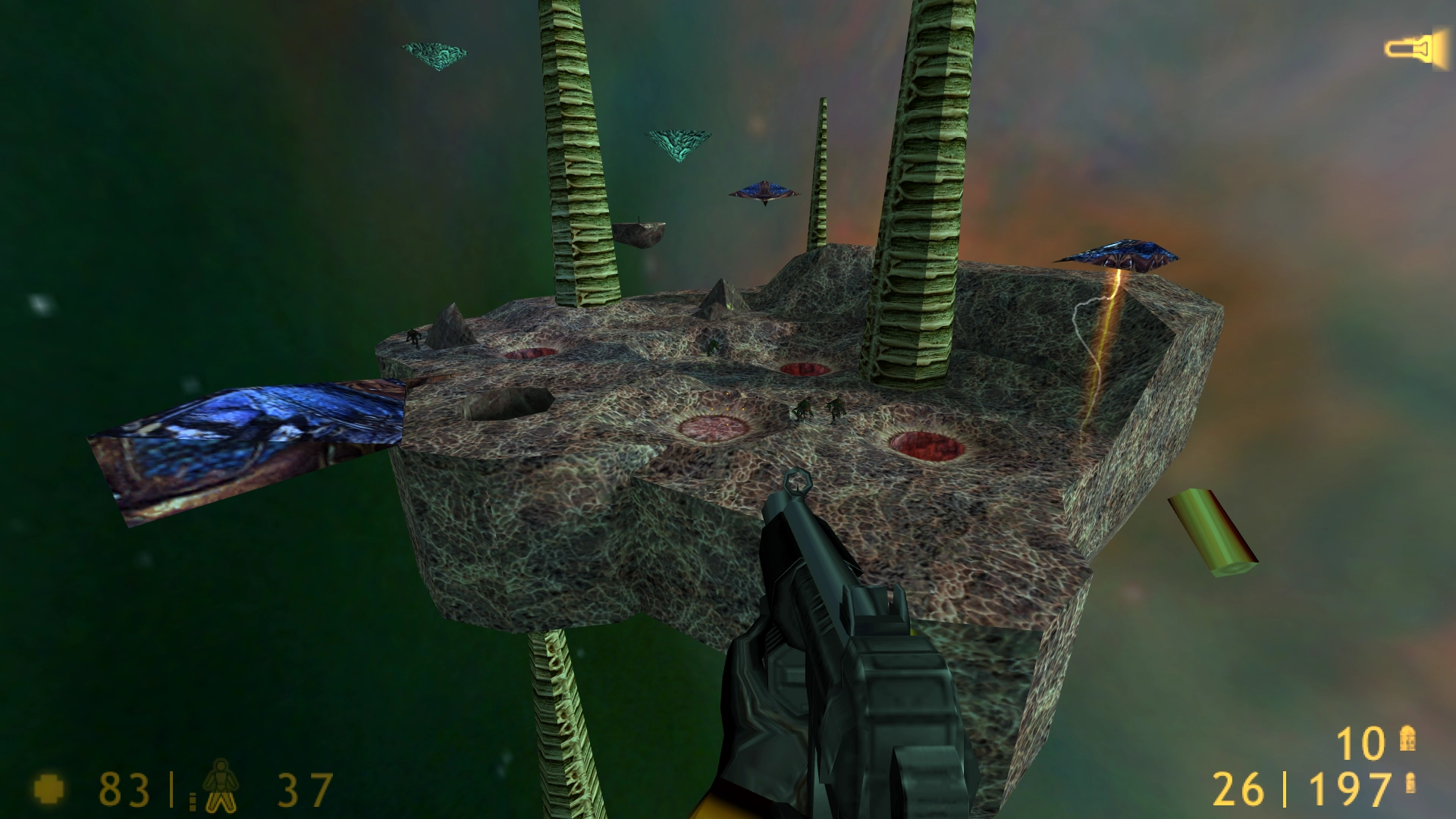
Sorry, I'm trying too hard to be fussy. I just can't. This game is close to perfect and has no drawbacks. Probably the worst thing about it is the sequel, which will get flak in due time. Because Half-Life is unique, and it will always be. I pity those who didn't enjoy it in time, and may not appreciate it nowadays.
| Expansions |
|
The universe of HL was expanded with official content, mostly commissioned to Gearbox Software:
|
Playing
Steam. You can usually get it for free on the day of its anniversary (November 19). If you absolutely can't tolerate the ancient graphics because you are an inferior human being, there is a community-made remake with excellent reviews, Black Mesa. I haven't played it (yet).